
Maldives' Social Housing Crisis: Are We Helping Those in Need or Rewarding Those Who Exploit the System?

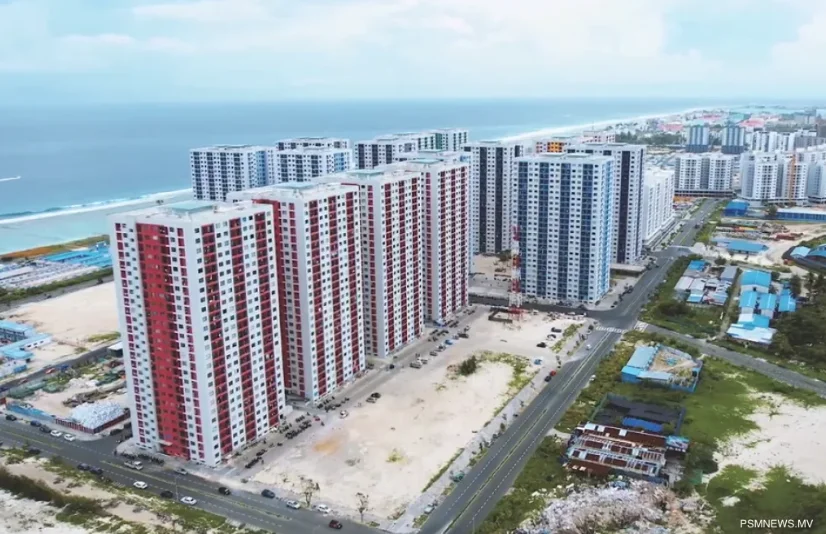
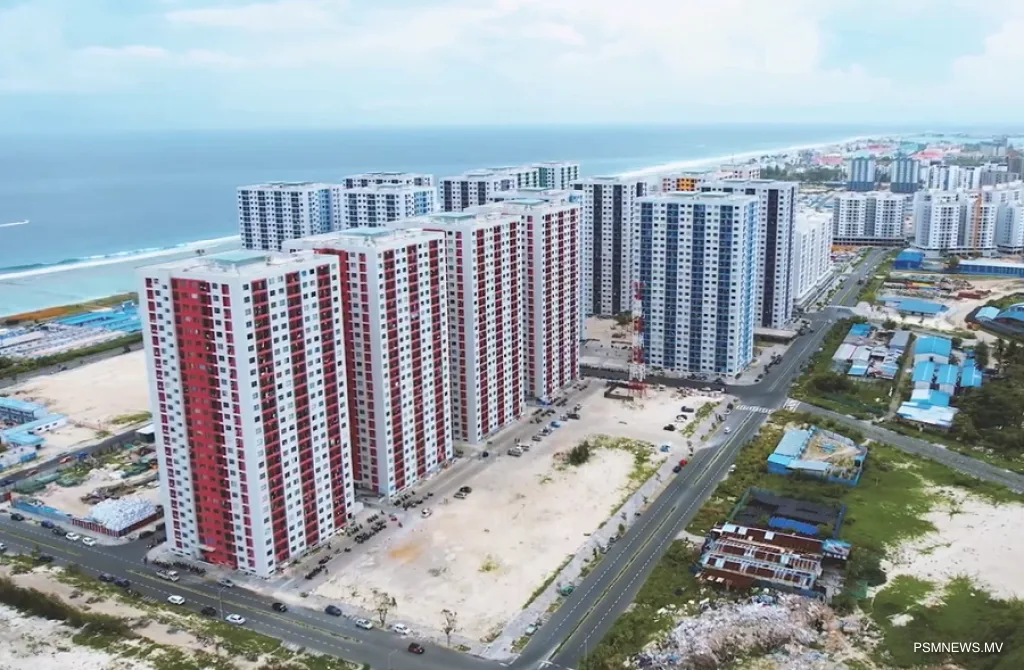
A recent statement attributed to the Managing Director of Housing Development Corporation (HDC) has brought a troubling issue into focus. According to the reported figures, approximately 50% of the 12,000 social housing units managed by HDC have not been paying rent regularly, with many reportedly failing to make payments altogether.
This raises a fundamental question: Is this how a social housing system should operate?
Social housing is intended to provide affordable accommodation to people who genuinely need assistance. However, weaknesses in eligibility assessments, enforcement, occupancy monitoring and rent collection risk turning an essential social protection programme into a system that benefits some at the expense of others.
1. Social Housing Is Not Necessarily Going to Those Who Need It Most
The first major concern is the process through which social housing units are awarded.
The purpose of social housing should be straightforward: to provide affordable homes to individuals and families who cannot reasonably secure suitable accommodation through the private housing market.
Yet serious questions remain about whether the existing eligibility and screening mechanisms accurately identify those most in need.
Does the government have a reliable system to assess applicants' actual income, assets, housing circumstances and financial responsibilities? Are applicants' declarations independently verified? Is eligibility reassessed when circumstances change?
Without a transparent, comprehensive and consistently applied assessment mechanism, the system risks excluding genuinely vulnerable families while awarding valuable housing benefits to individuals who may not require them.
Social housing should be determined by genuine housing need, not merely by an applicant's ability to satisfy administrative requirements.
2. Subsidized Flats Are Becoming Private Rental Businesses
Perhaps one of the most concerning weaknesses is the apparent failure to ensure that social housing units are occupied by their intended beneficiaries.
Flats awarded at subsidized monthly rents of less than MVR 5,000 are reportedly being offered on the private rental market for MVR 15,000–18,000.
If such practices are widespread, the implications are serious.
A person receives a government-supported flat on the grounds that they need affordable housing, only to rent it out at three or four times the subsidized rate.
Meanwhile, another family, potentially rejected during the eligibility screening process, ends up paying the much higher market rent to live in that very flat.
The irony is difficult to ignore: those declared eligible for affordable housing may become landlords, while those rejected by the system become their tenants.
This defeats the fundamental purpose of social housing.
The government must establish effective occupancy verification mechanisms, conduct regular inspections and enforce restrictions on unauthorised subletting.
Beneficiaries who deliberately misuse subsidised housing should face proportionate penalties, including the possible withdrawal of housing benefits following a fair review process.
3. MVR 700 Million in Unpaid Rent: Where Is the Accountability?
The reported accumulation of approximately MVR 700 million in unpaid housing rent raises another serious concern about the government's ability and willingness to enforce its own policies.
MVR 700 million is an enormous amount of public money.
It could make a substantial contribution towards developing another batch of affordable housing units for families still waiting for a home.
Instead, substantial sums remain uncollected while thousands of people continue to struggle with high rents and limited housing opportunities.
The question is not whether people facing genuine financial hardship should be punished. Social housing policies must recognise unemployment, illness, disability and other circumstances that may temporarily affect a household's ability to pay.
However, there must be a clear distinction between genuine inability to pay and deliberate refusal to pay.
Consider how the government handles unpaid annual vehicle fees. Vehicle owners are subject to regular checks and financial penalties for non-compliance.
Why should a similar principle of accountability not apply to subsidised housing, particularly when the amounts involved are substantially greater?
The government should introduce a structured rent enforcement mechanism, including payment reminders, affordable repayment arrangements, financial hardship assessments and proportionate penalties for persistent, unjustified non-payment.
Allowing arrears to accumulate indefinitely without meaningful intervention sends the wrong message: that paying rent is optional.
4. Subsidised Housing May Be Inflating the Entire Rental Market
The consequences of unauthorised subletting extend beyond individual beneficiaries.
When a government-supported flat costing less than MVR 5,000 per month is rented out for MVR 15,000–18,000, it can reinforce already inflated rental expectations.
Private landlords may use these rental rates as benchmarks when setting prices for their own properties.
The result is a market where high rents become increasingly normalised, regardless of whether those prices reflect reasonable housing costs.
This creates a deeply troubling cycle.
The government provides subsidised housing to make accommodation more affordable. Some beneficiaries then allegedly rent out those properties at commercial rates. These prices may contribute to wider market expectations, making accommodation even less affordable for households that received no government assistance.
Ultimately, the burden falls on lower- and middle-income families, particularly those who spend a substantial portion of their monthly earnings on rent.
A housing subsidy intended to reduce inequality should never become a mechanism that deepens it.
5. Housing Eligibility Should Not Depend on Where a Citizen Comes From
Another fundamental concern is the unequal treatment of Maldivian citizens in housing eligibility assessments.
Current and previous housing schemes have faced criticism for giving preferential treatment to individuals registered in Malé while imposing additional residency requirements on citizens registered in other islands.
This creates a situation in which a person holding a Malé identity card may receive preferential consideration even if they have spent many years living abroad.
Meanwhile, someone registered in another island, despite having lived, worked and raised a family in the Greater Malé area for decades, may face additional barriers to eligibility.
How can such a distinction be justified in a national social housing programme?
A Maldivian citizen's birthplace or registered island should not determine whether they deserve access to affordable housing.
Article 23 of the Constitution of the Maldives recognises the right to adequate housing, among other economic and social rights, subject to the state's resources and ability. The constitutional principle of equality and non-discrimination is separately protected under Article 17.
Housing policies should therefore be examined against both the right to adequate housing and the requirement for equal treatment.
The government must move away from arbitrary distinctions based on island registration and towards a fair, nationwide, needs-based housing framework.
6. Unreliable Residency and Income Records Undermine the Screening Process
The fairness of any housing allocation system depends on the quality of the information used to assess applicants.
Yet another concern is whether the government maintains sufficiently reliable records to establish who has actually lived in Malé, for how long, and under what circumstances.
If residency requirements are imposed without dependable records, applicants may be treated differently based on their ability to produce documentation rather than their actual circumstances.
Similar problems arise when income is assessed.
Individuals employed in the public sector or formal private businesses generally have documented salaries, pension contributions and employment histories.
Their income is relatively easy to verify.
By contrast, individuals working as freelancers, informal traders or self-employed service providers may have less visible income records.
Without comprehensive verification, applicants with substantial but poorly documented earnings could appear financially disadvantaged, while salaried employees with transparent income records may be assessed less favourably.
This creates a potentially unfair system in which financial transparency can become a disadvantage, while undocumented income may escape proper scrutiny.
The government needs an integrated and fair verification process covering income, assets, household composition, residency and existing property ownership, with appropriate privacy safeguards.
7. Housing Reform Must Go Beyond Building More Flats
The Maldives cannot resolve its housing challenges simply by constructing more buildings while leaving the weaknesses of the existing system untouched.
Even if thousands of additional housing units are developed, the same problems will continue if eligibility remains inconsistent, unauthorised subletting is tolerated and rent collection is poorly enforced.
Meaningful reform requires the government to:
- Introduce transparent, nationwide eligibility criteria based primarily on genuine housing need.
- Establish reliable systems for verifying income, assets, residency and household circumstances.
- Regularly verify that subsidised flats are occupied by their authorised beneficiaries.
- Prohibit and effectively enforce restrictions against unauthorised commercial subletting.
- Introduce fair but firm rent collection and arrears recovery mechanisms.
- Provide targeted assistance to beneficiaries facing genuine financial hardship.
- Publish regular reports on allocations, occupancy, rental arrears and enforcement actions.
- Establish an independent and accessible appeals mechanism for rejected applicants.
Conclusion: Public Housing Must Serve the Public Interest
Social housing is not merely about handing over the keys to a flat. It is about ensuring that public resources are used fairly, responsibly and effectively to help people secure affordable homes.
When thousands of beneficiaries reportedly fail to pay rent, subsidised flats appear on the commercial rental market, and genuinely needy families remain excluded, it is reasonable to question whether the current system is functioning as intended.
The government must recognise that building more flats is only part of the solution. Equally important is ensuring that existing housing benefits reach the right people and remain accountable to the public.
A system that rewards misuse, tolerates persistent non-payment and discriminates between citizens cannot be considered a fair social housing system.
The real measure of success should not be how many flats the government builds or allocates, but how many families genuinely in need are able to secure and retain affordable housing.
Until that becomes the central principle of housing policy, the Maldives risks continuing to build more homes without solving its housing crisis.


